1. Import your survey
Import an NVI as a shapefile or GeoPackage, or continue working with data from Biodiv Field.

Processing, analysis & reporting
Turns nature value data into measurable indicators and enables scenario-based analysis and comparison of impacts, compensation and alternative project layouts. Automatic CLIMB report generation.
Why
With Biodiv you can quantify biodiversity and compare scenarios far more efficiently – quickly, transparently and in a way that is relevant to the business.
In many projects, biodiversity comes in late, when the design is already locked. Biodiv Metrics makes it possible to analyse impacts earlier in the process and work systematically on improvements before decisions are made.
The platform is built on CLIMB and calculates CU (CLIMB units) as clear decision support for nature impacts – from baseline to scenario comparisons and a finished report.
Biodiversity and CLIMB calculations: from up to 2 weeks to half a day — in many cases users find Biodiv 10x faster than their previous process.
Import an NVI as a shapefile or GeoPackage, or continue working with data from Biodiv Field.
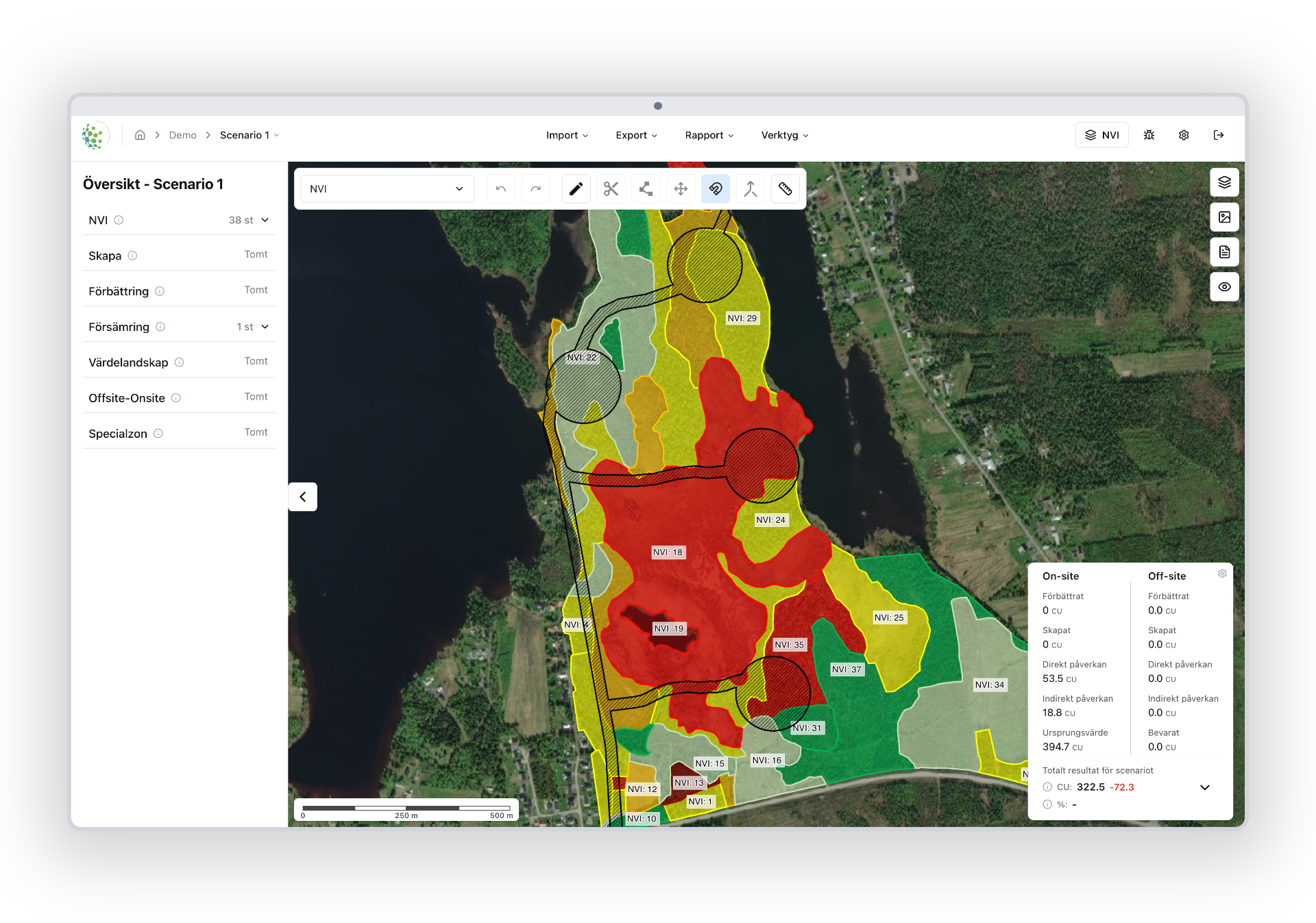
After import, Biodiv calculates the current value in CU (CLIMB units) so you quickly get a clear baseline.
Import degradation, enhancement, development and compensation, and see the effect on biodiversity instantly.
Move, adjust and create alternative scenarios to compare results and choose the best way forward.
Reporting
Once the scenarios have been compared, you get a clear CLIMB overview, with results that are easy to follow and communicate within the project team.
You can then generate a CLIMB report in one click, to use as decision support and to communicate impacts to internal and external stakeholders.
The goal is simple: a faster process, lower costs and better biodiversity decisions earlier in every project.
The CLIMB method
CLIMB and Biodiv can be applied across habitat types and projects – from housing and infrastructure to energy, restoration and compensation.
CU becomes a shared KPI for nature impacts, making it easier to compare alternatives using the same logic throughout the process.

"We went from several spreadsheets to comparable scenarios in one single tool."
We'll show you how to go from input data to comparable CLIMB results and clearer decision support.