Use case
Ecological compensation
When nature is affected by land use change, you need measurable evidence – whether for permits, development or voluntary targets such as no net loss of nature. CLIMB makes losses and gains comparable in CU. Biodiv visualises scenarios and measures in the same map-based workflow.
The mitigation hierarchy in CLIMB
CLIMB follows the internationally recognised four-step approach: avoid impacts, minimise them where they still occur, restore within the project and compensate for the remaining loss – according to the CLIMB method. CU makes every step measurable in the same model.
- • Compare locations and designs to find the lowest nature impact.
- • Size compensation measures and track the net effect over time.
- • Support voluntary targets and internal nature strategies – not just formal permits.
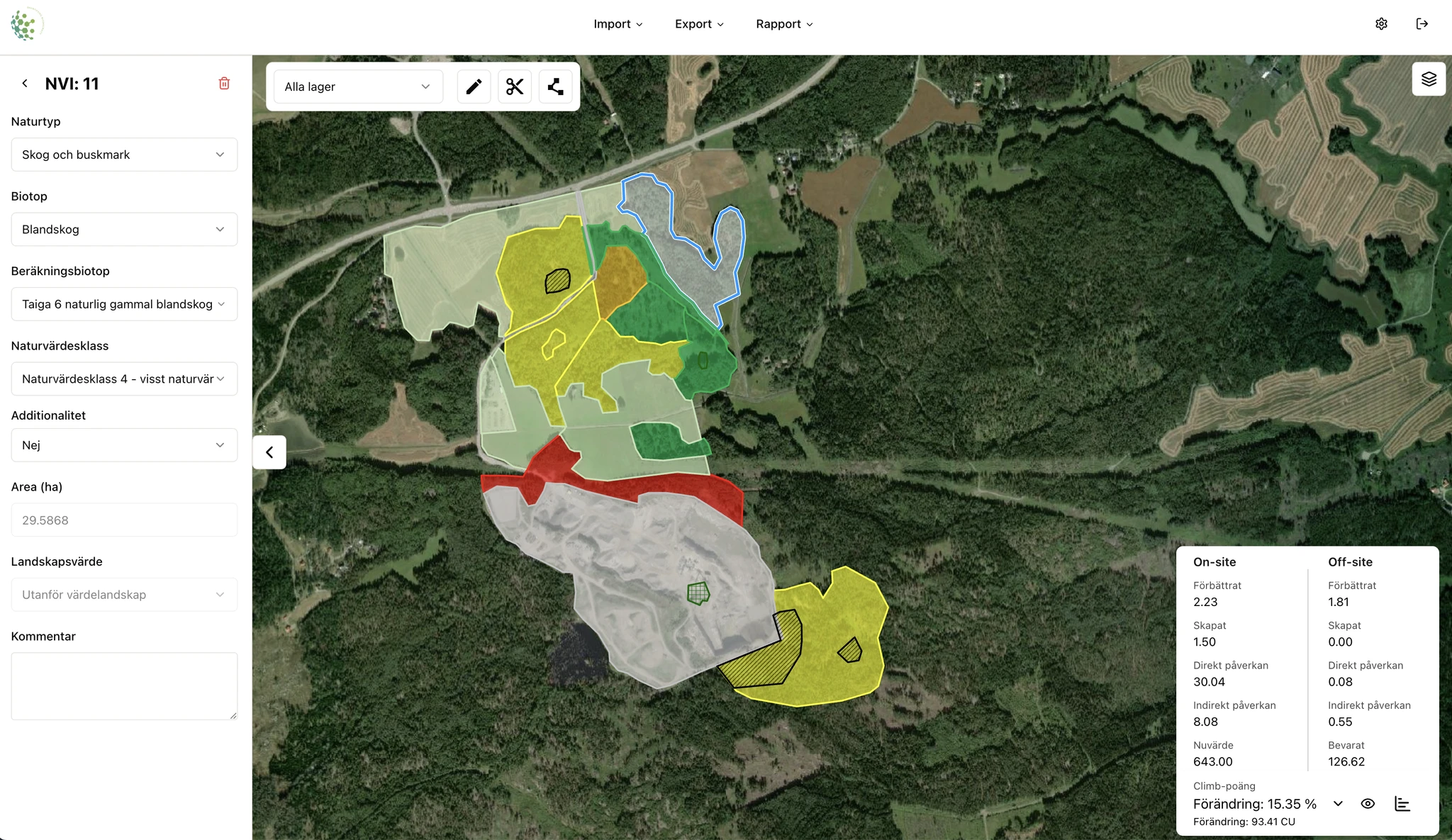
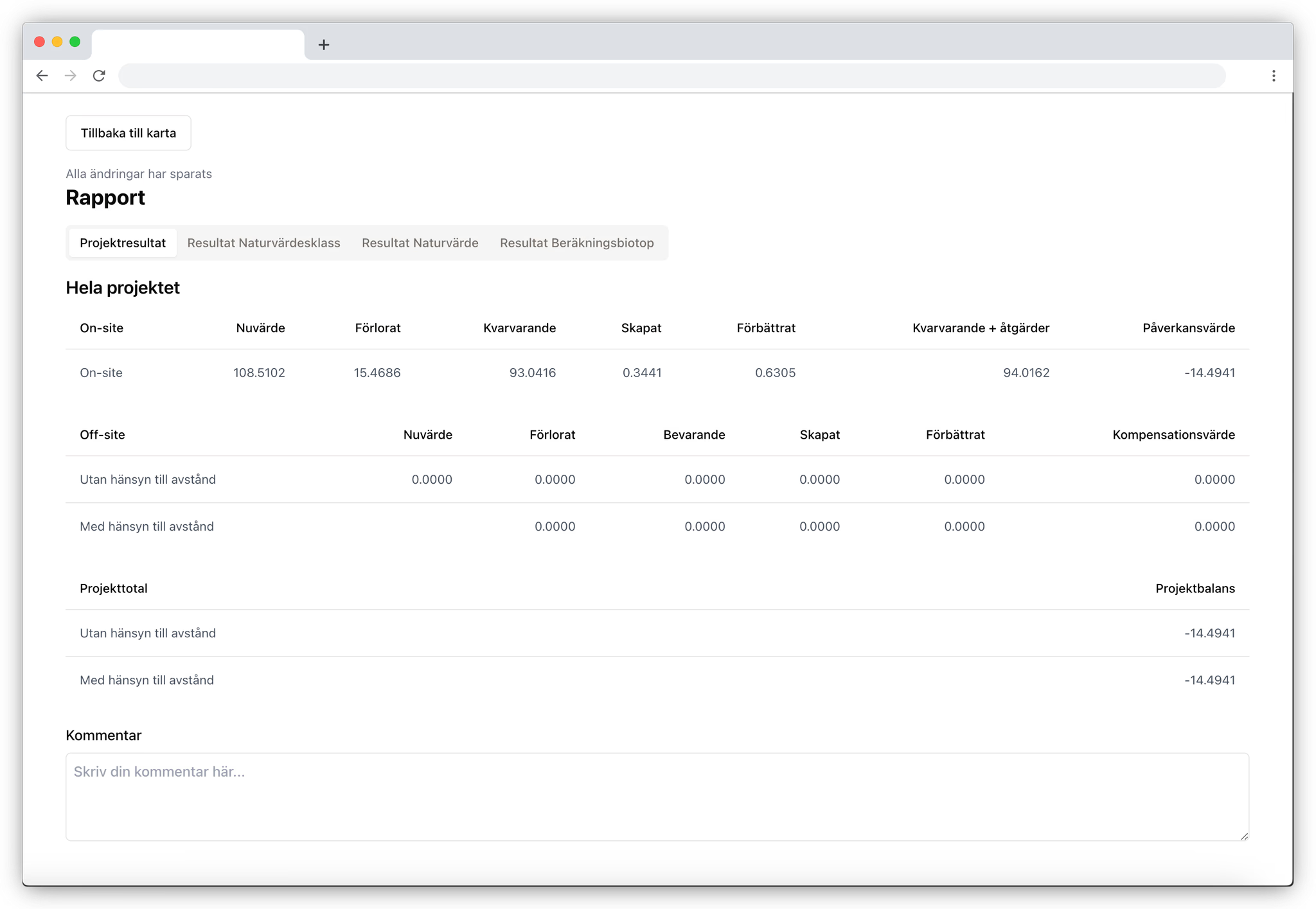
Impact and compensation in two areas
CLIMB first calculates the loss in the impact area, then the gain from additional measures in a compensation area. The model takes into account the distance and the biogeographical region between the areas. In Biodiv, both can be modelled and compared in the same map-based workflow.
Permits and case law
CLIMB has been used in environmental permitting and has led to clearer permit conditions. In some cases, the Swedish Land and Environment Court has required compensation measures to correspond to at least 115% of the impact value calculated using CLIMB or a similar model (see e.g. case M 1573-20).
Read about the 115% requirement (in Swedish) · Environmental permitting
"We could show the net effect of compensation measures using the same CU logic as the project's intervention – it made the dialogue much simpler."
FAQ
FAQ about ecological compensation
CLIMB, CU and Biodiv in compensation work.
Does CLIMB only apply to environmental permitting? +
No. The same CU logic supports voluntary targets, internal nature strategies and no net loss of nature – wherever you want to show in figures that your compensation holds up.
What is required for compensation to count? +
Measures in the compensation area must be additional and modelled using the same NVI and CLIMB logic as the impact. Read more on the CLIMB page and in the method description.
Can we compare several compensation alternatives? +
Yes. In Biodiv you can model different measures and scenarios and compare CU before and after on the same map.
Do we always need 115% compensation? +
No – the requirement depends on the permit and the court. CLIMB provides a common language for discussing and documenting compensation levels when required.
Want to size compensation with clear figures?
We'll show you how CU and scenarios support your project or your voluntary nature targets.