
Use case
Environmental permitting
Biodiv helps teams build clearer documentation for environmental permitting by analysing impacts earlier, comparing alternatives and documenting consequences using consistent CLIMB logic.
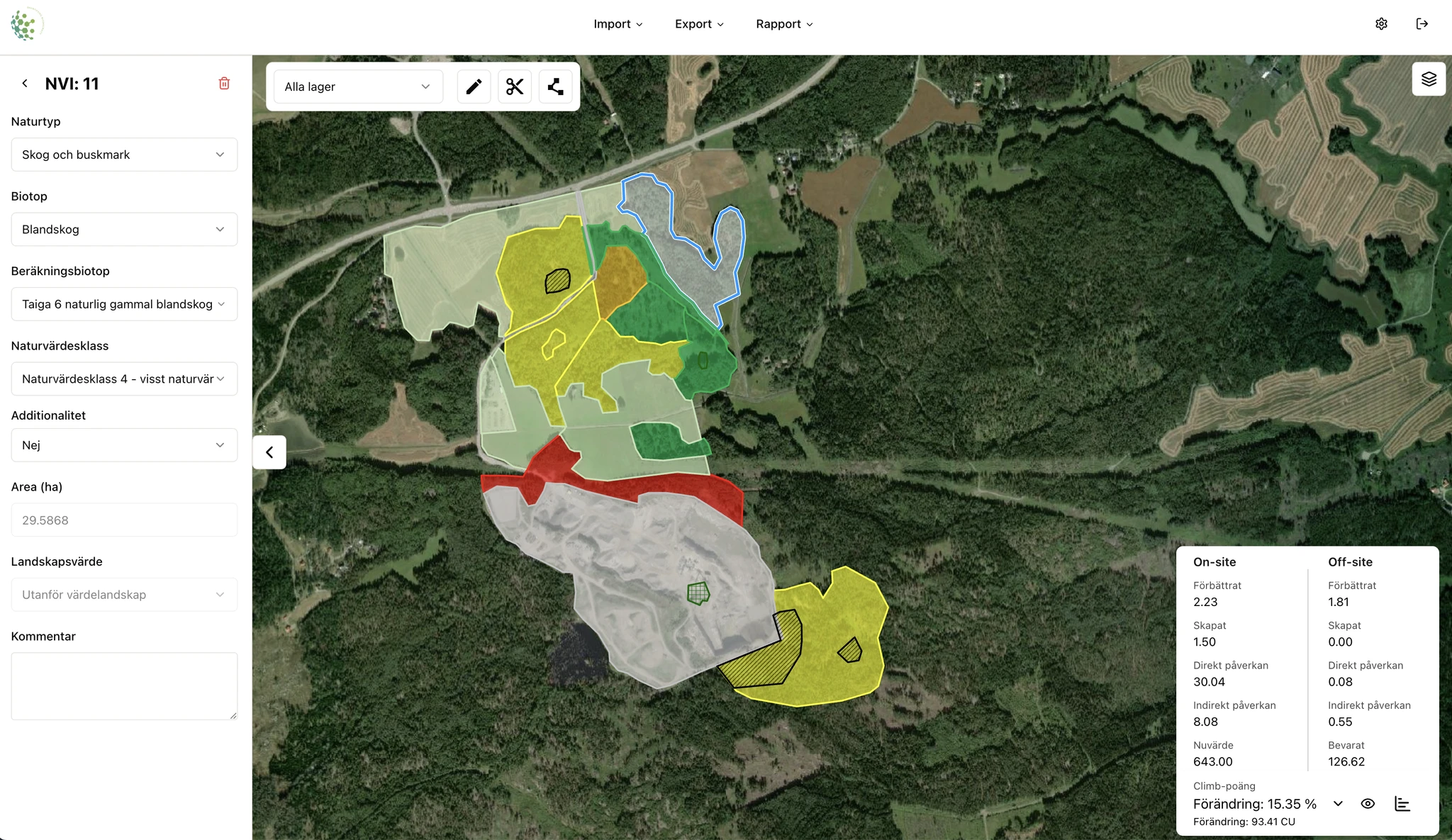
Why use Biodiv at this stage?
- • Earlier impact analysis while alternatives can still be adjusted.
- • Comparable scenarios for better trade-offs within the project team.
- • Clearer documentation for dialogue with internal and external stakeholders.
- • Reporting that supports traceable communication.
Throughout the process
From early comparisons to final documentation
Biodiv supports teams throughout their work on permit documentation – early on, when alternatives can be compared and adjusted, and later, when the documentation for the formal permitting process is prepared.
The goal is to make nature impacts clearer and more traceable at every stage.
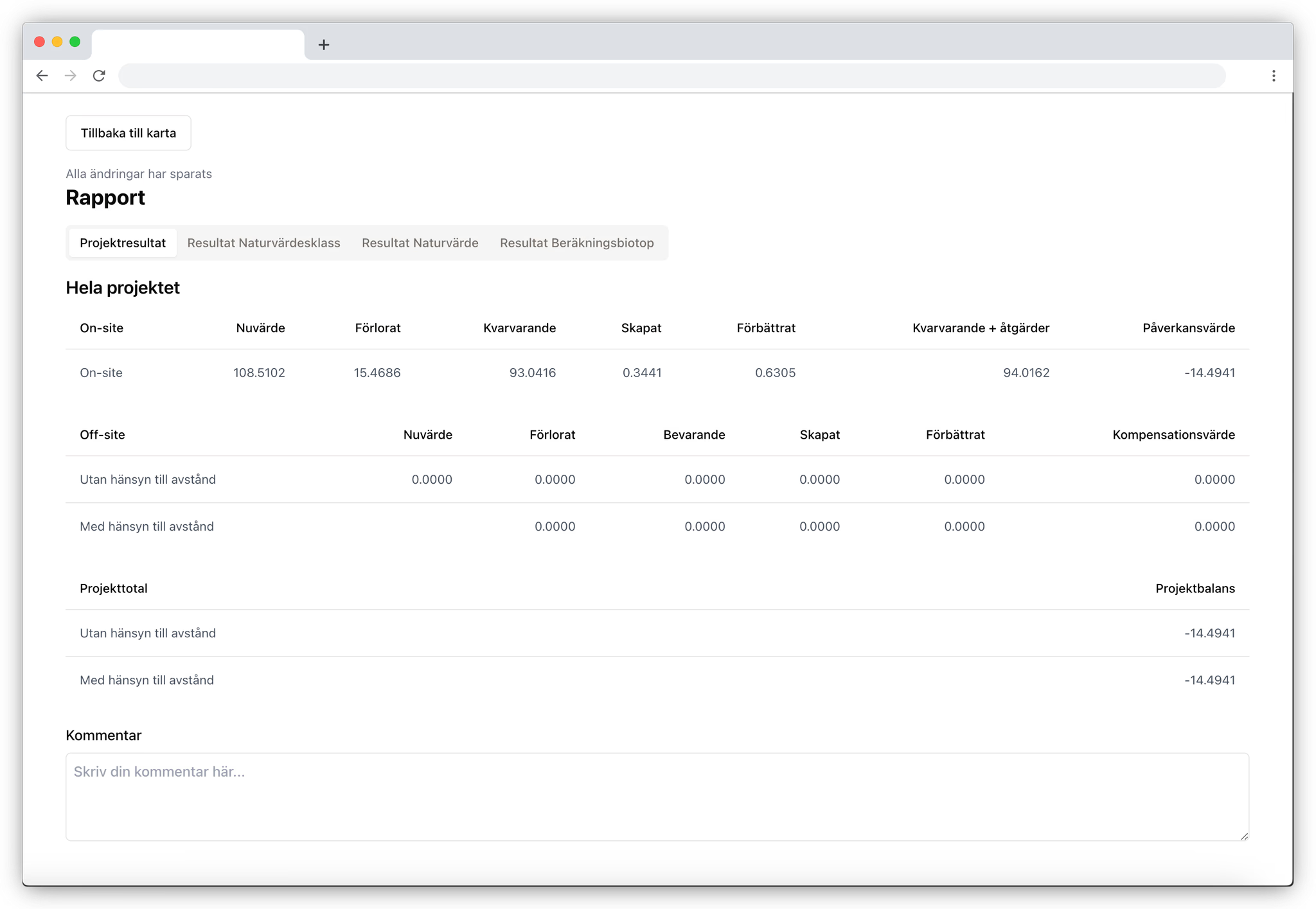
"With Biodiv we could use CLIMB to quantify impacts, compare alternatives and clearly show the effect of compensation measures in our permit application."
FAQ
FAQ about environmental permitting
How Biodiv can be used when preparing documentation for permitting.
What does Biodiv do in the permitting process? +
Biodiv supports analysis, scenario work and documentation of nature impacts – from early comparisons of alternatives to the documentation for the permit application.
When in the process does Biodiv add the most value? +
Early on, when alternatives can still be compared and adjusted – but also in the final stage, when the documentation for the formal permitting process is compiled and nature impacts need to be clear and traceable.
How does this relate to CLIMB? +
Biodiv uses CLIMB logic to make results comparable across baseline, impacts, measures and scenarios. Read about 115% compensation in court (in Swedish) and ecological compensation.
Want to strengthen your permit documentation?
We'll show you how to work with clear, comparable documentation earlier in the process.