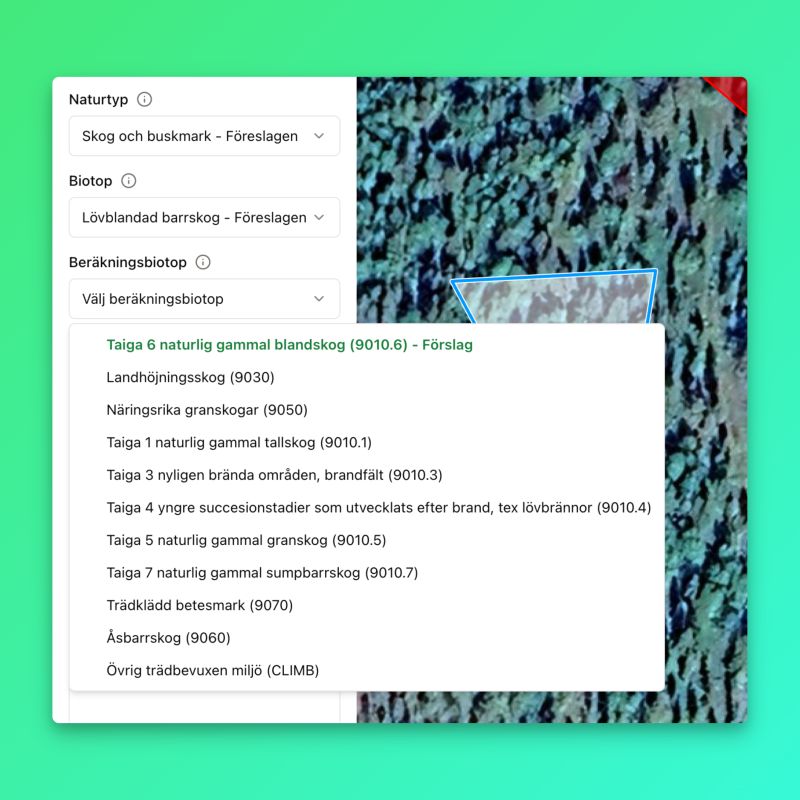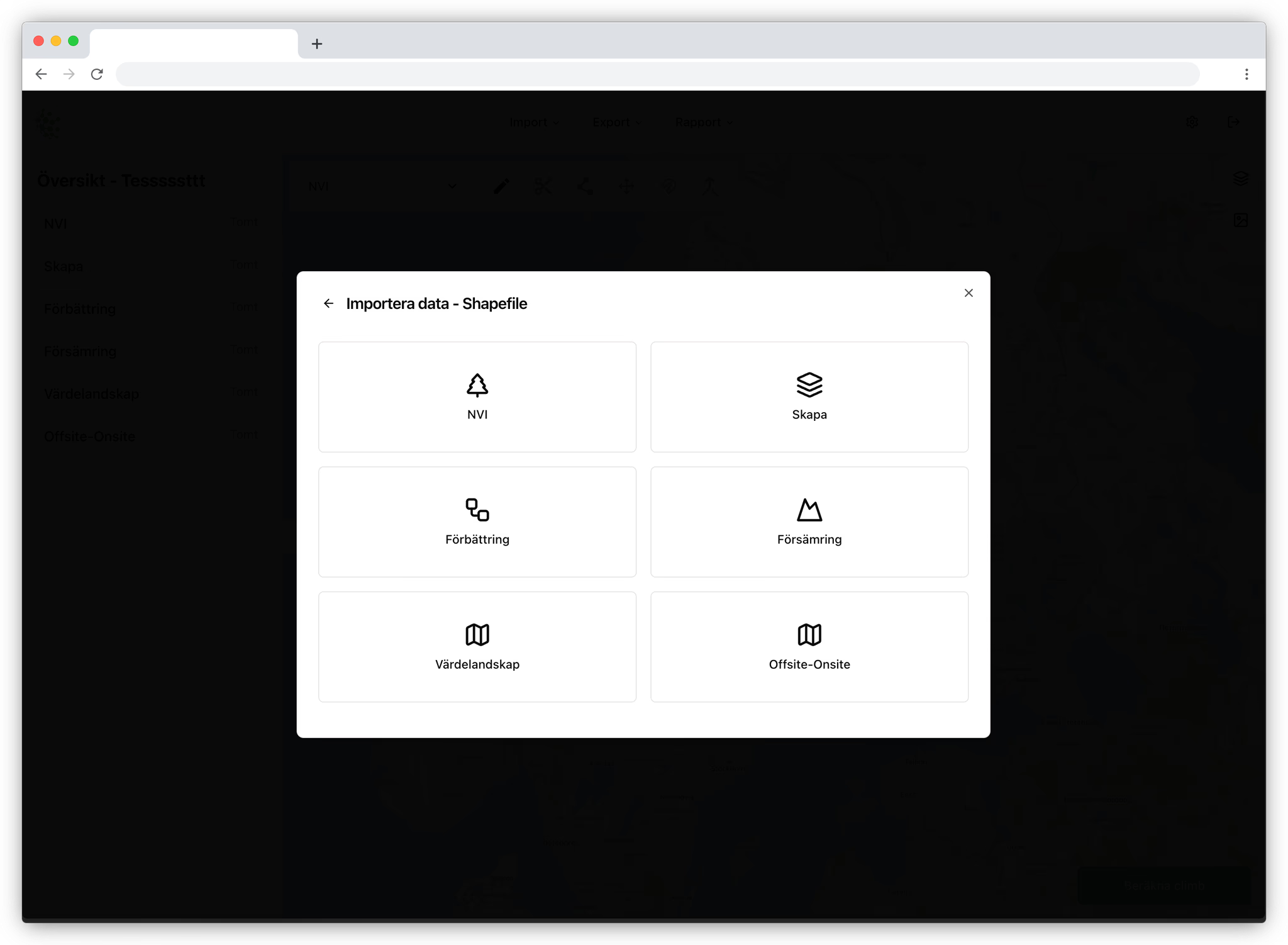
1. From NVI to a calculated baseline
Import the NVI and relevant map layers to quickly get a quantified CLIMB baseline for the area.

Solution
Biodiv makes it easy to go from NVI to CLIMB. Quickly calculate the baseline, see the change caused by development such as housing, and evaluate the effect of compensation measures – all in the same workflow.
Workflow
Import the NVI and relevant map layers to quickly get a quantified CLIMB baseline for the area.
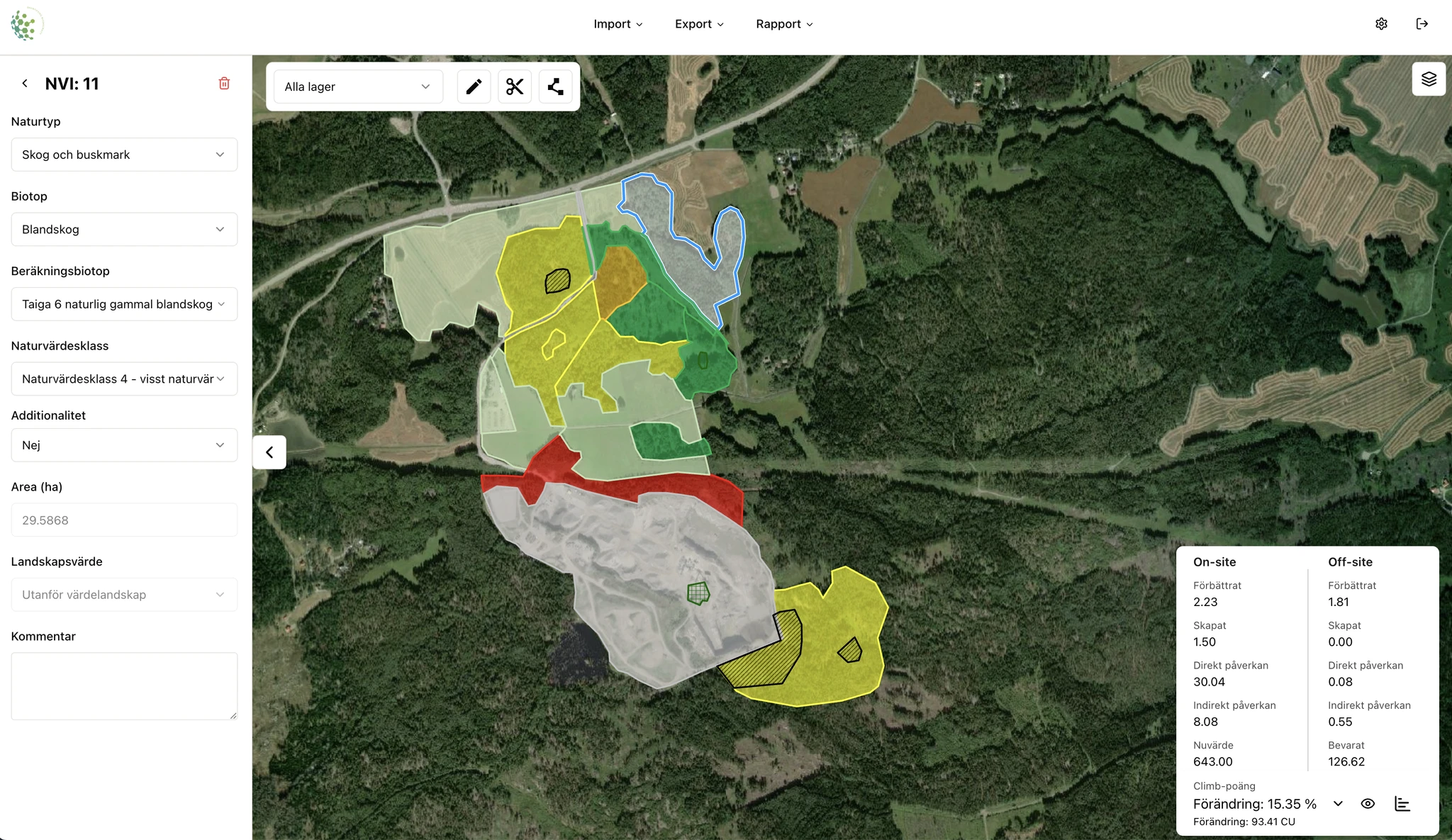
Model buildings, roads and other land use, and instantly see how the biodiversity value changes compared with the baseline.
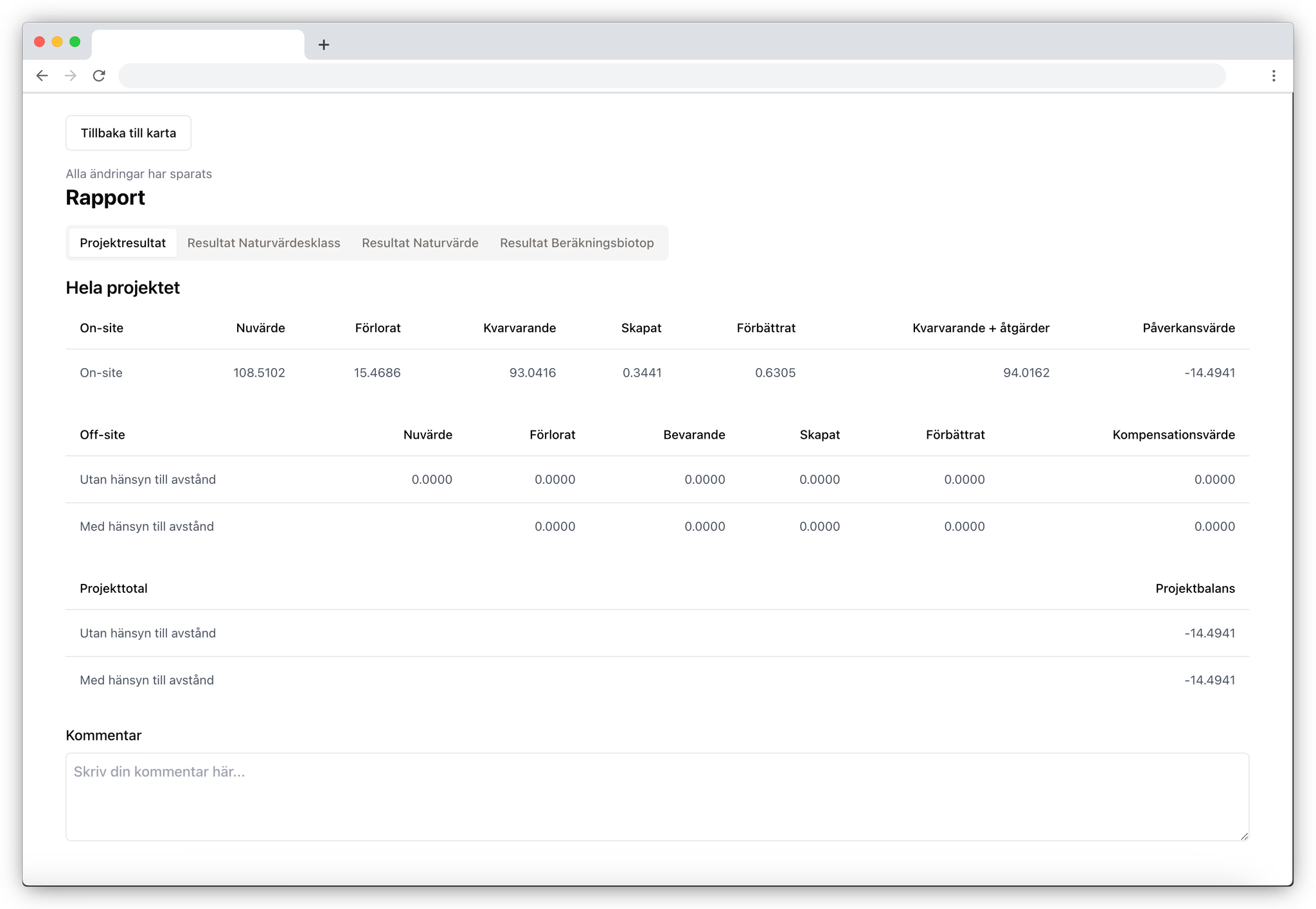
Test different designs and compensation measures side by side and share clear decision support.
Included today
Potential project benefits
Outcomes vary between projects and need to be validated for each set-up.
"By bringing biodiversity in earlier and being able to experiment with our impact, we will be able to make better decisions."
A common challenge in the process
Biodiversity issues often come in late, when the project design is already locked. Nature considerations then become more expensive to handle and harder to integrate into decisions.
That is why a fast, quantitative workflow matters: with Biodiv you can calculate baseline and change, compare layouts and show what different compensation measures actually achieve.
Selected articles on detailed development planning, urban development and biodiversity in early project stages. The articles are in Swedish.
Further reading
Read more about the method on the CLIMB page and about the workflow on the platform page.
Dig deeper into related content: Biodiversity in detailed development plans – from requirements to workable documentation (in Swedish).
FAQ
Quick answers on how Biodiv can be used in detailed development planning and urban development.
No. The platform is built for cross-functional teams where ecological expertise, project management and planning need to work from the same data.
No. Biodiv is decision support for earlier analysis and scenario work, and complements existing processes rather than replacing them.
Yes. An existing NVI can be imported and used as the basis for further analysis, scenario comparisons and reporting.
Biodiv uses CLIMB logic for quantification, so results are comparable between alternatives and over time.
We'll show you how your team can go from input data to comparable decisions with a clear and practical workflow.